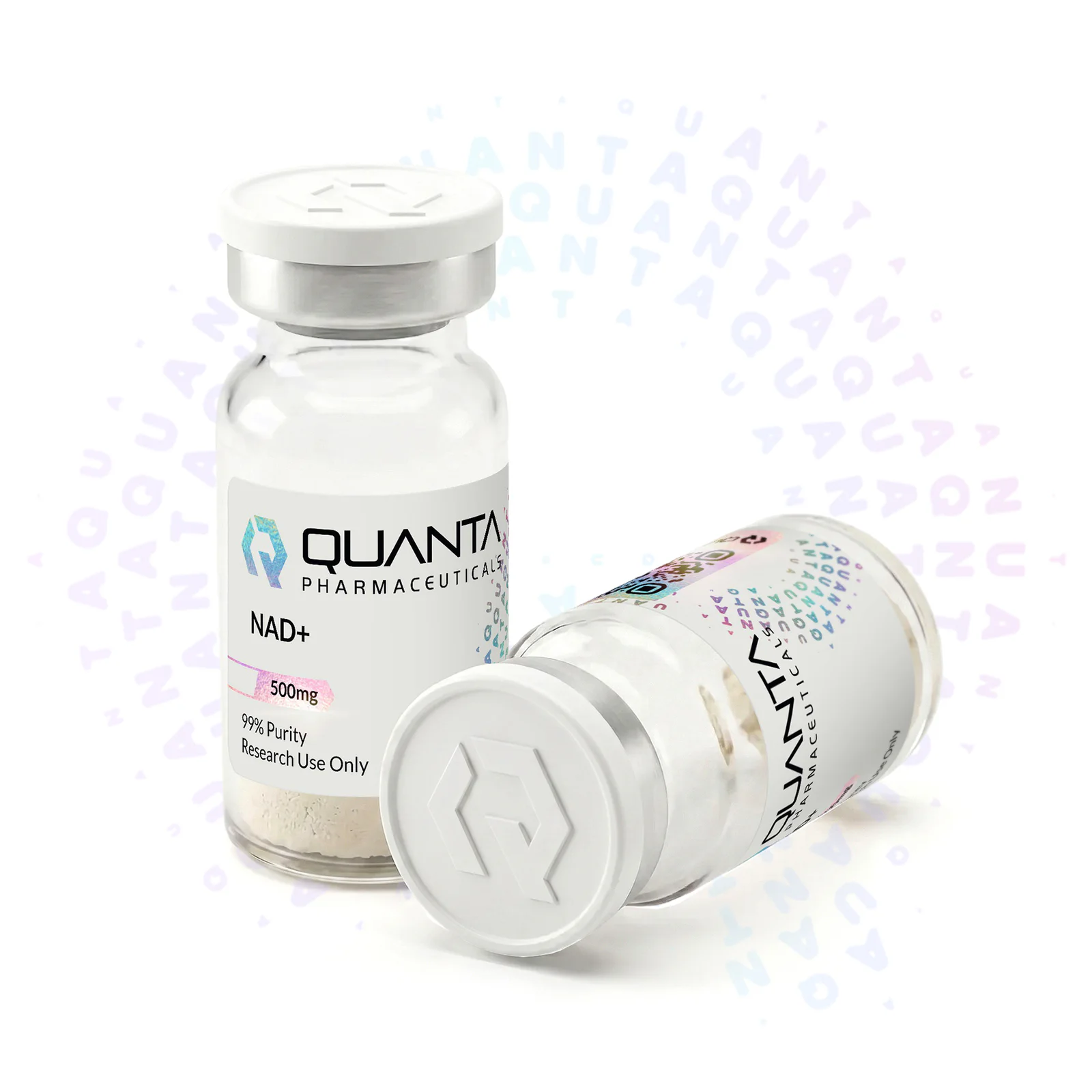
Vials
NAD+ 500mg
Nicotinamide adenine dinucleotide, a coenzyme central to cellular energy production and DNA repair research.
NAD+ (Nicotinamide Adenine Dinucleotide) is a coenzyme found in every living cell, central to metabolism, energy production, and DNA repair. It serves as an essential cofactor for hundreds of enzymatic reactions, including those governing mitochondrial energy output and sirtuin-mediated longevity pathways. Cellular NAD+ levels are well documented to decline with age, a decline linked in research to reduced mitochondrial efficiency and impaired DNA repair capacity — making NAD+ replenishment a frequent subject of longevity and cellular-energy research. Research and wellness-clinic protocols commonly use 50-100mg per subcutaneous injection, 2-3 times weekly, or 100-500mg per intravenous session for faster delivery. Direct pharmacokinetic data on injectable NAD+ (peak levels, elimination half-life) remains a notably understudied area of the literature, so dosing intervals in practice are guided more by protocol convention than by published half-life figures. Each vial is supplied at 500mg.
Independent laboratory documentation
Certificates of Analysis
View the laboratory reports currently published for this product.
Certificate of Analysis
Specifications
Research Benefits
- Cellular energy production — Serves as an essential cofactor in mitochondrial ATP generation.
- DNA repair support — Required by PARP enzymes involved in repairing damaged DNA.
- Sirtuin pathway research — Investigated as a substrate for sirtuins, enzymes linked to cellular longevity regulation.
- Cellular communication — Studied for its role as a signalling substrate across multiple metabolic pathways.
- Established dosing conventions — Common research protocols run 50-100mg subcutaneously 2-3x weekly, or 100-500mg per IV session.
How It Works
Because NAD+ levels decline measurably with age, and this decline is linked to reduced mitochondrial efficiency and DNA-repair capacity, direct NAD+ administration is studied as a way of replenishing the coenzyme pool more directly than upstream precursors like NMN or NR. Its own pharmacokinetics as an injectable — how quickly it's cleared once administered — are less well characterised in the literature than its downstream biological roles.
⚠ For Research Use Only
By purchasing, the buyer confirms this product is being acquired for legitimate research purposes and assumes full responsibility for its handling, storage, and use in compliance with all applicable local, national, and international laws.
More Vials
Vials
5-Amino-1MQ 50mg
A selective NNMT inhibitor studied for reducing fat-cell formation and preserving cellular NAD+ levels.
View
Vials
AOD-9604
A modified HGH fragment (176-191) studied for fat metabolism without growth-hormone-linked anabolic activity.
View
Vials
BPC-157 5mg
A gastric-derived pentadecapeptide extensively studied for tendon, gut and musculoskeletal tissue repair.
View